Complete Guide to Government Solar Subsidies in India 2025
Discover all government solar subsidies available in India 2025. Learn how to get 30-40% cost reduction on your solar installation with complete eligibility criteria.
Shivam
12/6/20254 min read
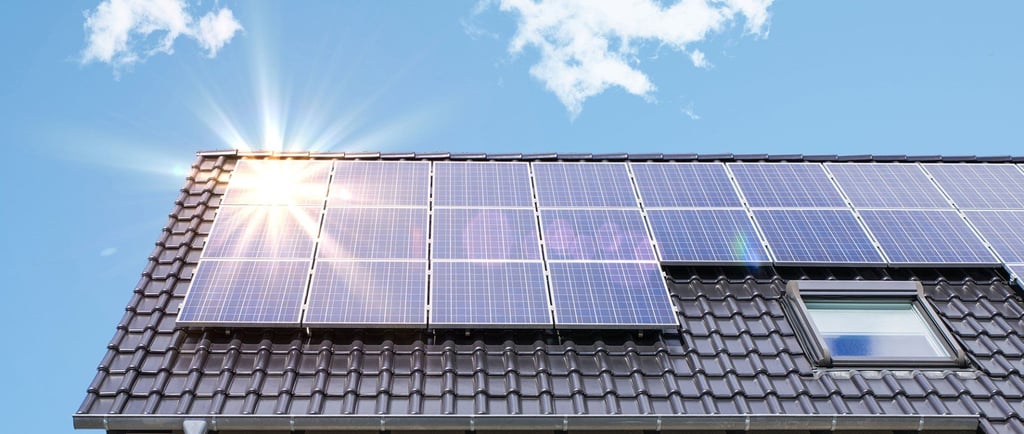
Rising electricity bills are forcing Indian homeowners to look for sustainable alternatives. Solar energy is the perfect solution, but the initial installation cost can be a barrier. The good news? The Indian government offers substantial subsidies that can reduce your solar system cost by 30-40%. In this complete guide, we'll walk you through every government solar subsidy scheme available in 2025.
Understanding Government Solar Subsidies
The Ministry of New and Renewable Energy (MNRE) offers multiple subsidy schemes designed to make solar affordable for every Indian family. These subsidies can reduce your net installation cost dramatically, sometimes allowing you to recover your investment in just 2-3 years instead of 4-6 years.
Types of Government Solar Subsidies:
Pradhan Mantri Kisan Urja Suraksha Evam Utthan (PM-KUSUM) Scheme
Offers 50% subsidy on solar systems for agricultural use
Available capacity: Up to 7.5 MW
Especially beneficial for farmers in rural areas
Includes solar water pumps and grid-connected systems
Subsidy disbursement through direct bank transfer
Residential Rooftop Solar Scheme
Provides 30-40% capital subsidy for residential installations
System capacity: 1 kW to 10 kW per household
Available in most states and union territories
Subsidized interest rates on solar loans (3-4% instead of 10-12%)
Additional government guarantee for oans up to 90% of system cost
Commercial/Industrial Solar Scheme
25-40% capital subsidy for commercial establishments
Applicable for businesses, factories, and offices
Priority given to manufacturing units and export-oriented industries
Larger system sizes eligible (10 kW to several MW)
State-Specific Solar Subsidies
Maharashtra: Up to ₹40,000 per kW
Karnataka: 40% subsidy with additional state benefits
Tamil Nadu: 50% cost reduction through state incentives
Telangana: Free rooftop solar for eligible households
Check your state solar policy for specific amounts
Eligibility Criteria for Solar Subsidies
For Residential Consumers:
Must own or have permission to use the rooftop
No default on electricity payment for 12 months
Not already receiving solar subsidy from other sources
Connection must be in your name for minimum 1 year (may vary by state)
Income limits: Generally no restriction for residential rooftop scheme
For Commercial/Industrial:
Registered business with PAN and GST registration
No arrears on electricity bills
Minimum system size: Usually 10 kW
Must demonstrate commercial operation
For Agricultural (PM-KUSUM):
Cultivators with cultivable land
Must be using grid-connected or individual agricultural pump
Land ownership or lease documents required
Step-by-Step Process to Apply for Solar Subsidy
Step 1: Find Your State's Nodal Agency
Visit your state's MNRE website to identify the designated agency handling solar subsidy applications. This varies by state—some use state energy boards, others use specific solar companies.
Step 2: Get Technical Assessment
Submit a request with your rooftop photos, electricity bills, and basic information. An accredited agency will visit your property to assess suitability. They'll check roof condition, orientation, shadow analysis, and system design feasibility.
Step 3: Receive Design & Quotation
The agency provides a technical design meeting MNRE specifications and a detailed quotation. The system size is calculated based on your electricity consumption and subsidy eligibility.
Step 4: Submit Application
Fill out the official government application form with required documents:
Proof of ownership/permission for rooftop
Identity proof (Aadhar/PAN)
Electricity connection copy
Bank account details
Last 12 months electricity bills
Technical design document
Step 5: Approval & Component Procurement
After application approval, procure components from authorized manufacturers. MNRE maintains lists of approved solar panel and inverter manufacturers to ensure quality.
Step 6: Installation
Get the system installed by accredited installers. Installation must follow MNRE guidelines for safety and performance standards.
Step 7: Inspection & Grid Connection
Government officials inspect the completed system. Once approved, apply for net metering connection with your distribution company (DISCOM).
Step 8: Subsidy Disbursement
Subsidy amount is transferred directly to your bank account within 30-90 days of final inspection and approval.
How Much Subsidy Can You Get?
Example Calculation for 3 kW System:
System cost: ₹3,00,000 (₹1,00,000 per kW)
Government subsidy (35%): ₹1,05,000
Your cost after subsidy: ₹1,95,000
Additional bank loan (if applicable): ₹1,75,500 (90% of ₹1,95,000)
Your down payment: ₹19,500
In this scenario, you pay only ₹19,500 upfront!
Monthly EMI on ₹1,75,500 loan at 6% interest: ₹2,950
Your monthly electricity savings: ₹5,000 (for ₹5,000 bill)
Net monthly benefit: ₹2,050
Common Mistakes to Avoid
Applying through unauthorized channels – Always apply through official government portals or accredited agencies. Avoid private consultants asking for registration fees.
Installing before approval – Never install a system before receiving official government approval. It will disqualify you from subsidy.
Using non-approved components – Use only MNRE-approved manufacturers. Check the official approved list before purchasing.
Not maintaining proper documentation – Keep all original receipts, invoices, and certificates. Required for subsidy disbursement and warranty claims.
Missing deadlines – Application processes have timelines. Submit all documents promptly. Once approved, you usually have 60-90 days to complete installation.
Ignoring state-specific requirements – Each state has slightly different documentation and eligibility requirements. Check your state's solar policy page.
Recent Changes in 2025
The government has streamlined the subsidy process:
Online application portals for faster processing
Reduced documentation requirements in most states
Faster disbursement (30 days instead of 90 days average)
Higher subsidy amounts in some states to boost adoption
PM-KUSUM expansion for non-agricultural rooftop installations
Combining Multiple Benefits
You can often combine government subsidies with:
Accelerated depreciation benefits for commercial installations (80% in 5 years)
Solar subsidized loans from banks at 6-7% interest
Net metering credits earning you additional income
State-specific incentives on top of central government schemes
Timeline: When Will You Recover Your Investment?
With government subsidies and financing:
Down payment: 2-3 months of your regular electricity bill
Payback period: 3-4 years (instead of 5-6 years)
25-year benefit: ₹15-30 lakhs in savings depending on system size
Frequently Asked Questions
Q: Can I apply for subsidy if I already have solar panels?
A: Generally no. Subsidy applications must be made before installation. Contact your state agency for specific circumstances.
Q: How long does the entire process take?
A: 3-4 months on average (1 month for approval + 2 months installation + 30 days subsidy disbursement).
Q: Do I need to pay upfront before getting subsidy?
A: Not necessarily. Many banks provide loans first, then subsidy adjusts the loan amount. Check with your state agency.
Q: Can I upgrade my system later?
A: Yes, but you'll need a fresh subsidy application for the additional capacity.
Conclusion
Government solar subsidies make solar energy accessible to every Indian household. With 30-40% cost reduction and favorable financing options, the actual cost of going solar is significantly lower than most people realize. The application process, while seeming complex, is straightforward when you follow the proper channels.
Don't let initial cost concerns stop you from going solar. Start your subsidy application today with help from accredited agencies. Most states are accepting applications throughout 2025 with faster processing times than ever before.
Ready to apply? Contact SolarClub today for free guidance on government subsidies and installation. We handle all paperwork, making the process hassle-free.